


Rigid vs Folding Gift Boxes: Which Should Your Brand Choose?
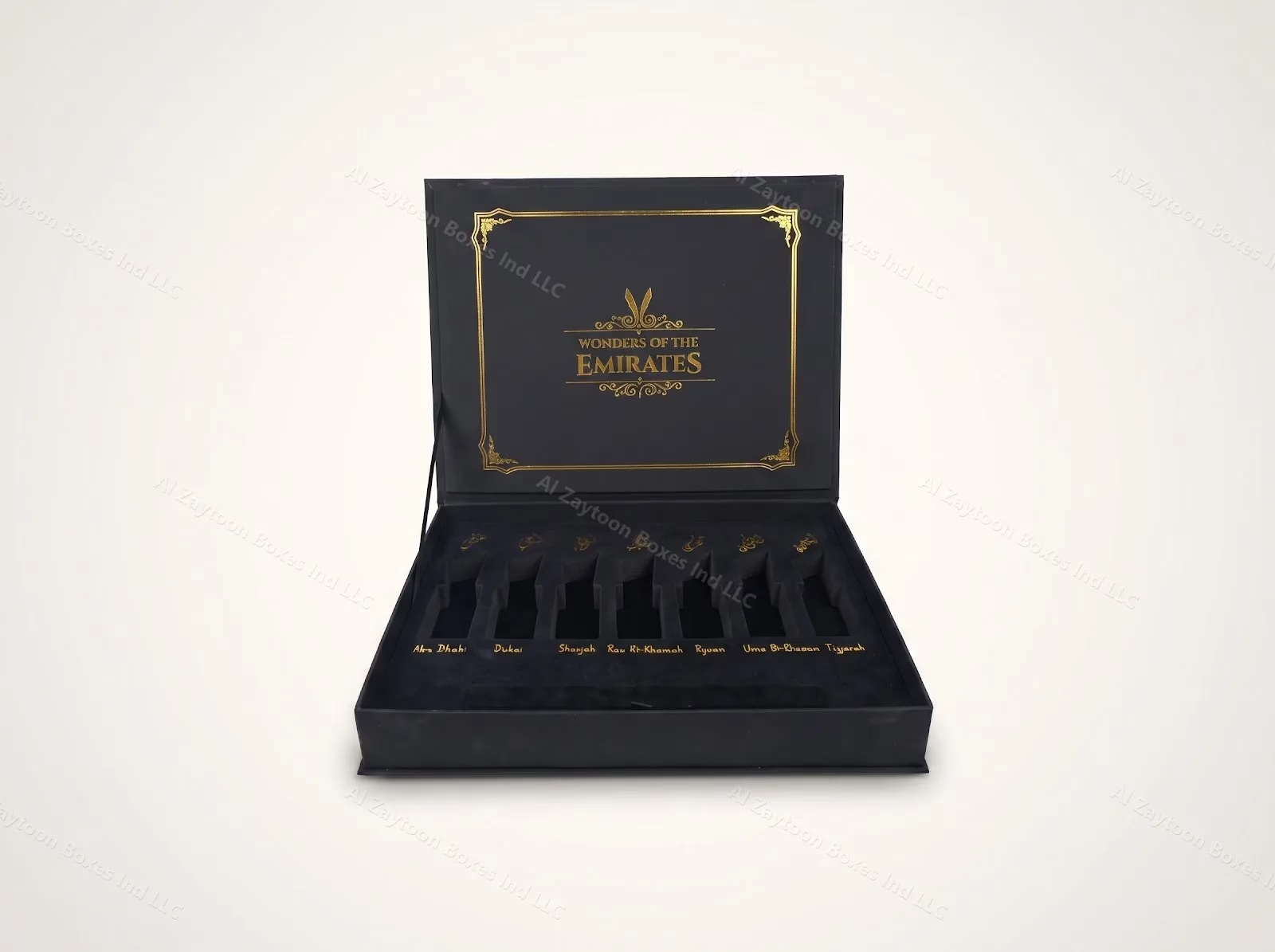
Rigid gift boxes are made from thick, stiff board wrapped in paper, and they arrive already assembled. Folding gift boxes (folding cartons) are made from thinner paperboard, are delivered flat and are folded into shape when you pack them. Rigid boxes feel more premium and protect better; folding boxes cost less, take less storage space and suit large quantities. The right choice depends on your product, your budget and how you will store and ship the boxes.
Quick comparison
| Rigid gift box | Folding gift box | |
|---|---|---|
| Material | Thick greyboard wrapped in printed or special paper | Single layer of paperboard (card), printed directly |
| Delivery | Assembled, ready to use | Flat; folded by hand when packing |
| Feel | Heavy, solid, premium | Light, clean, practical |
| Protection | High; walls do not bend | Medium; best for light products |
| Storage and shipping of empty boxes | Takes more space | Takes much less space |
| Cost per box | Higher | Lower |
| Typical uses | Perfume, jewellery, VIP and corporate gifts, luxury chocolates | Cosmetics, retail products, sweets, giveaways, e-commerce |
| Reuse by customer | Often kept and reused | Usually recycled |
What is a rigid gift box?
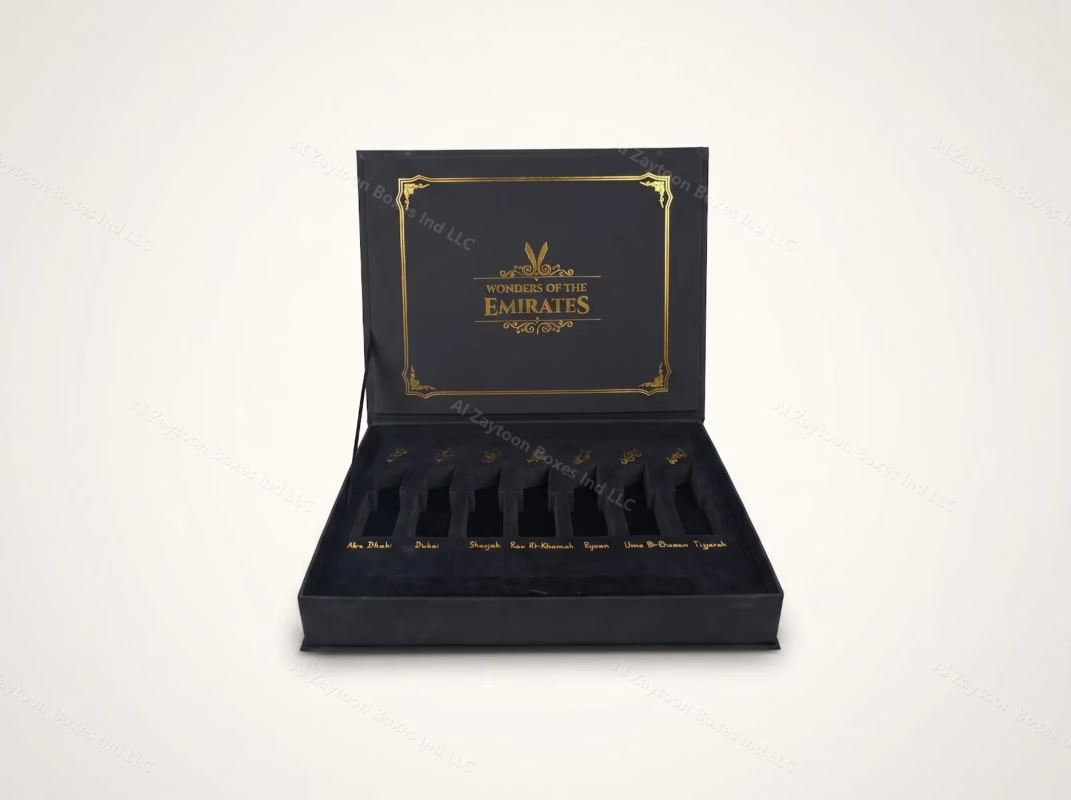
A rigid box is built from greyboard (also called chipboard) that is much thicker than normal card. The board is cut, formed into a box and then wrapped with paper: printed paper, textured paper, metallic paper, leather-look material or fabric. Because the walls are stiff, the box keeps its shape and closes with a clean, solid feel.
Rigid boxes come in many styles: magnetic flap boxes, lid-and-base boxes, hinged lid boxes, drawer (sliding) boxes, book-shape boxes and boxes with ribbon or rope handles. Read more about why brands choose them in why rigid boxes are perfect for luxury products.
Advantages of rigid boxes
- Premium look and weight in the hand.
- Strong protection for glass bottles, jewellery and fragile items.
- Many luxury finishes: foil, embossing, special papers, velvet or foam inserts.
- Customers often keep the box, so your logo stays in their home.
Things to consider
- Higher cost per box, because of more material and more hand work.
- Empty boxes take up space in your store or warehouse.
- Usually a longer production time than simple folding cartons.
What is a folding gift box?
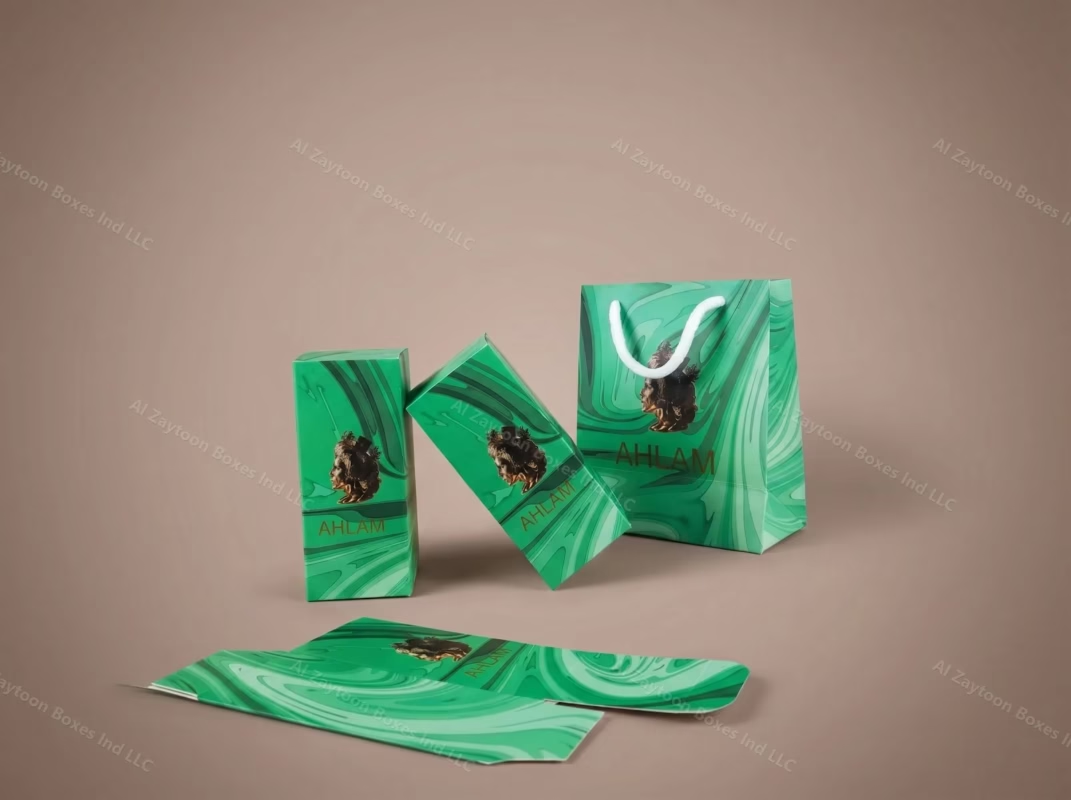
A folding box is cut from one sheet of paperboard, then creased and glued so it can fold flat. Paperboard for gift and retail boxes is usually in the range of about 250 to 400 gsm. The printing goes straight onto the board, and finishes such as lamination, foil and spot UV can be added. Common styles are tuck-end boxes, two-piece card boxes, pillow boxes and foldable gift boxes with a ribbon closure.
Advantages of folding boxes
- Lower cost per box, especially in large quantities.
- Delivered flat, so storage and transport are easier.
- Full-colour printing on every side.
- Light weight, which helps when you ship many orders.
Things to consider
- Less protection for heavy or fragile items.
- A less luxurious feel than rigid board.
- Someone has to fold and close each box when packing.

Which one should you choose?
Choose a rigid box if…
- The product is valuable or fragile: perfume, oud, jewellery, watches, glass.
- The box is part of the gift: VIP, corporate, wedding or Ramadan gifts.
- You want the customer to keep the box.
- Quantities are moderate and presentation matters more than unit cost.
Choose a folding box if…
- You need large quantities at a lower cost per box.
- The product is light: cosmetics, sweets, small accessories, samples.
- Storage space is limited, or you ship many online orders.
- The box is for retail shelves or promotional giveaways.
Use both
Many brands use a rigid box for their premium line or VIP clients and a folding box for everyday products, with the same colours and logo on both. This keeps the brand consistent while controlling cost.
Examples by product
| Product | Usually rigid | Usually folding |
|---|---|---|
| Perfume and oud | Luxury bottles, gift sets | Testers, small bottles, refills |
| Jewellery and watches | Most cases | Low-cost fashion jewellery |
| Chocolates | Premium and corporate boxes | Everyday retail boxes |
| Dates and sweets | Ramadan and VIP gifts | Bakery and shop packing |
| Cosmetics | Gift sets | Single products |
| Corporate gifts | Executive gifts | Event giveaways |
See examples on our perfume boxes, chocolate boxes, dates boxes and VIP rigid box pages.
What to prepare before you ask for a quote
- Product size and weight (or send a sample).
- Quantity now, and expected repeat orders.
- How the box will be used: gift, retail shelf or shipping.
- Look and finishing: paper type, colours, foil or embossing.
- Insert: foam, card, velvet or divided.
- Your logo as a vector file, and your delivery date.
Not sure which type fits? Send us your product details and we will suggest rigid, folding or a mix. For current minimum order quantities, production time and prices, please request a quote.
Frequently asked questions
What is the difference between rigid and folding gift boxes?
Rigid boxes are made from thick board wrapped in paper and arrive assembled. Folding boxes are made from thinner paperboard, arrive flat and are folded when packing. Rigid boxes feel more premium; folding boxes cost less and save space.
Are rigid boxes more expensive?
Yes, usually. They use more material and more hand work. Folding boxes are normally cheaper per box, especially in large quantities.
Can folding boxes look premium?
Yes. Good board, clean design and finishes like soft-touch lamination, foil and spot UV make a folding box look smart. They still feel lighter than a rigid box.
Are there rigid boxes that fold flat?
Yes. Collapsible (foldable) rigid boxes are made from rigid board but fold flat for shipping and pop up into shape. They save storage space while keeping a premium feel.
Which type is better for the environment?
Both are paper-based. Folding boxes use less material. Rigid boxes use more material, but customers often keep and reuse them. Avoiding plastic parts and laminations makes either type easier to recycle.
Conclusion
Choose a rigid box when the box is part of the gift and the product needs strong protection. Choose a folding box when you need lower cost, large quantities and easy storage. Many brands use both. Tell us about your product and we will help you choose. Request a quote.